


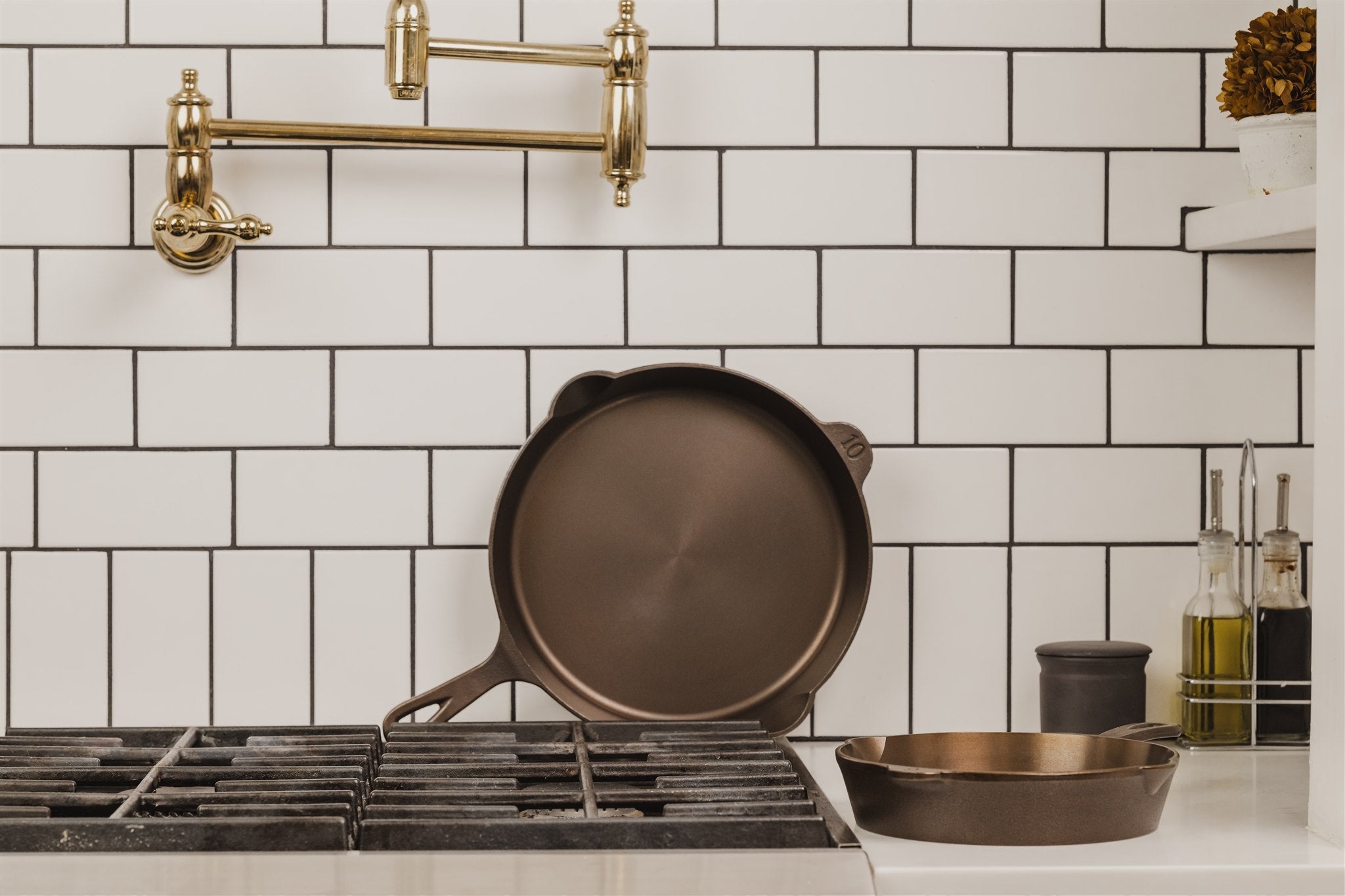
Getting started with cast iron can feel a little more complicated than it actually is. There are different skillet sizes, seasoning oils, scrubbers, handles, and plenty of advice online about what you should and shouldn't do. If you're new to cast iron, it's easy to look at all of it and wonder if you really need a whole collection of accessories just to cook dinner.
You don't.
A good cast iron starter kit can be surprisingly simple. You need a skillet you'll actually use, something to help keep it clean, a little seasoning oil to maintain the cooking surface, and a way to handle a hot pan comfortably. From there, the rest comes with cooking.
If we were putting together a cast iron collection for someone just starting out, this is where we'd begin.
Start With the Skillet You'll Actually Use
The most important part of any cast iron starter kit is, of course, the skillet.
For most people, we'd recommend starting with a No. 8 skillet. It's large enough for everyday meals without being so big or heavy that you hesitate to reach for it. Eggs for breakfast, vegetables for dinner, a couple of steaks, cornbread, roasted chicken thighs, skillet cookies, the No. 8 can handle all of it.
It's also a good size if you're still figuring out how cast iron fits into your cooking routine. You don't need to know exactly what you'll be making six months from now. Start with the skillet that gives you the most flexibility today.
And there's something to be said for starting with one skillet rather than buying every size at once. Once you've cooked with cast iron for a while, you'll quickly figure out whether you want something smaller for individual portions or something larger for family meals.
A Chainmail Scrubber for the Messy Stuff
One of the best things you can have next to your cast iron skillet is a good scrubber.
That's where a chainmail scrubber comes in.
Cast iron is durable, and you don't need to treat it like delicate cookware. When food gets stuck to the bottom of your skillet, you want something that can actually get in there and remove it. A chainmail scrubber is designed for exactly that.
After cooking, let the skillet cool enough to handle safely, then use warm water and your chainmail scrubber to loosen anything that's stuck to the surface. You can scrub without being afraid that you're going to ruin the pan every time you clean it.
And yes, you can use a little dish soap, too. The idea that soap automatically destroys cast iron seasoning is one of those cast iron myths that refuses to go away. A properly seasoned skillet can handle normal cleaning.
Keep Cast Iron Seasoning on Hand
If there's one thing worth keeping in your kitchen alongside your skillet, it's a good cast iron seasoning.
Seasoning isn't a one-time project. Your skillet arrives ready to cook, but the cooking surface will continue to change as you use it. Oil, heat, and regular cooking gradually build the seasoning, creating the surface that makes cast iron such a pleasure to cook with.
Every once in a while, though, your skillet may need a little help.
Maybe you've cooked something particularly acidic. Maybe you've scrubbed it a little harder than usual. Maybe the surface is starting to look dry. Or perhaps you simply want to give the pan another layer before putting it back into regular rotation.
That's when having seasoning oil nearby makes things easy.
Our Lancaster Cast Iron Seasoning is made with a mix of oils and locally sourced beeswax from beekeepers around Lancaster, Pennsylvania. It's designed to help maintain and build the seasoning on your cast iron skillet.
The important thing to remember is that you don't need much.
Apply a thin layer, spread it over the skillet, and then wipe away the excess. Your pan should look lightly coated rather than wet or greasy. Too much oil is one of the easiest ways to end up with a sticky surface.
A Leather Handle Cover for Everyday Cooking
Cast iron gets hot.
That's part of what makes it so good at searing, baking, and holding onto heat, but it also means you'll want a comfortable way to handle the skillet while you're cooking.
A leather handle cover is a simple addition that you'll probably end up using more than you expect.
It's especially helpful when you're moving the skillet from the stovetop to the oven or simply adjusting its position while you're cooking. You still need to be mindful that the cover can become hot if left on the skillet in the oven, but for stovetop cooking and handling, it gives you a much more comfortable grip.
There's also something nice about the way a leather handle cover looks after it's been used for a while. Like the skillet itself, it develops a little character.
That's really what we like about a cast iron setup.
None of these pieces are complicated. They're just useful.
So, What Does a Beginner Actually Need?
If you're starting from scratch, we'd keep it simple.
A No. 8 cast iron skillet gives you the everyday cooking surface. A chainmail scrubber helps you clean it when dinner doesn't quite come off as planned. Cast iron seasoning gives you what you need to maintain the cooking surface over time. And a leather handle cover makes handling a hot skillet a little easier.
That's your starter kit.
You don't need five skillets. You don't need a cabinet full of specialty accessories. And you definitely don't need to become an expert in cast iron care before you cook your first meal.
Start with the basics and learn your skillet by using it.
What Should You Cook First?
This is where the fun part starts.
If your skillet is new, start with something forgiving. Roast some vegetables. Cook bacon. Make grilled cheese. Try cornbread. Sauté onions. Make a skillet cookie.
You don't have to make your first meal something impressive.
In fact, we think it's better if it isn't.
The more you use your skillet, the more comfortable you'll become with how it heats, how much oil you like to use, and how the surface changes over time. You'll figure out which foods release easily and which ones need a little more patience.
You Don't Have to Be Precious About Cast Iron
This might be the biggest piece of advice we'd give someone buying their first skillet: don't be afraid of it.
Cast iron is tough. It's meant to be used.
You can wash it. You can scrub it. You can cook in it. You can put it in the oven. You can make a mistake and fix it. The seasoning might change. The color might change. You might have a meal that sticks more than you'd like. None of that means you've ruined your skillet. Cast iron gets better through use, not by sitting untouched on a shelf.
That's why we think a good starter kit should make cooking easier, not give you more things to worry about.
Build Your Collection From There
Once you've spent some time with your first skillet, you'll probably know what you want next.
Maybe you need a smaller skillet for breakfast or individual portions. Maybe you regularly cook for a family and want to move up to a No. 10 or No. 12. Maybe you've caught the baking bug and want to try a cast iron Dutch oven.
Start with one skillet. Add the tools that actually make cooking and caring for it easier. Then let your cooking tell you what comes next.
Because the best cast iron starter kit isn't the one with the most pieces.
It's the one that gets you cooking.
Share:
Cast Iron Seasoning Troubleshooting: What You’re Seeing, What’s Happening, and How to Fix It
Seasoned vs. Enameled Dutch Ovens: Which One Is Right for You?