

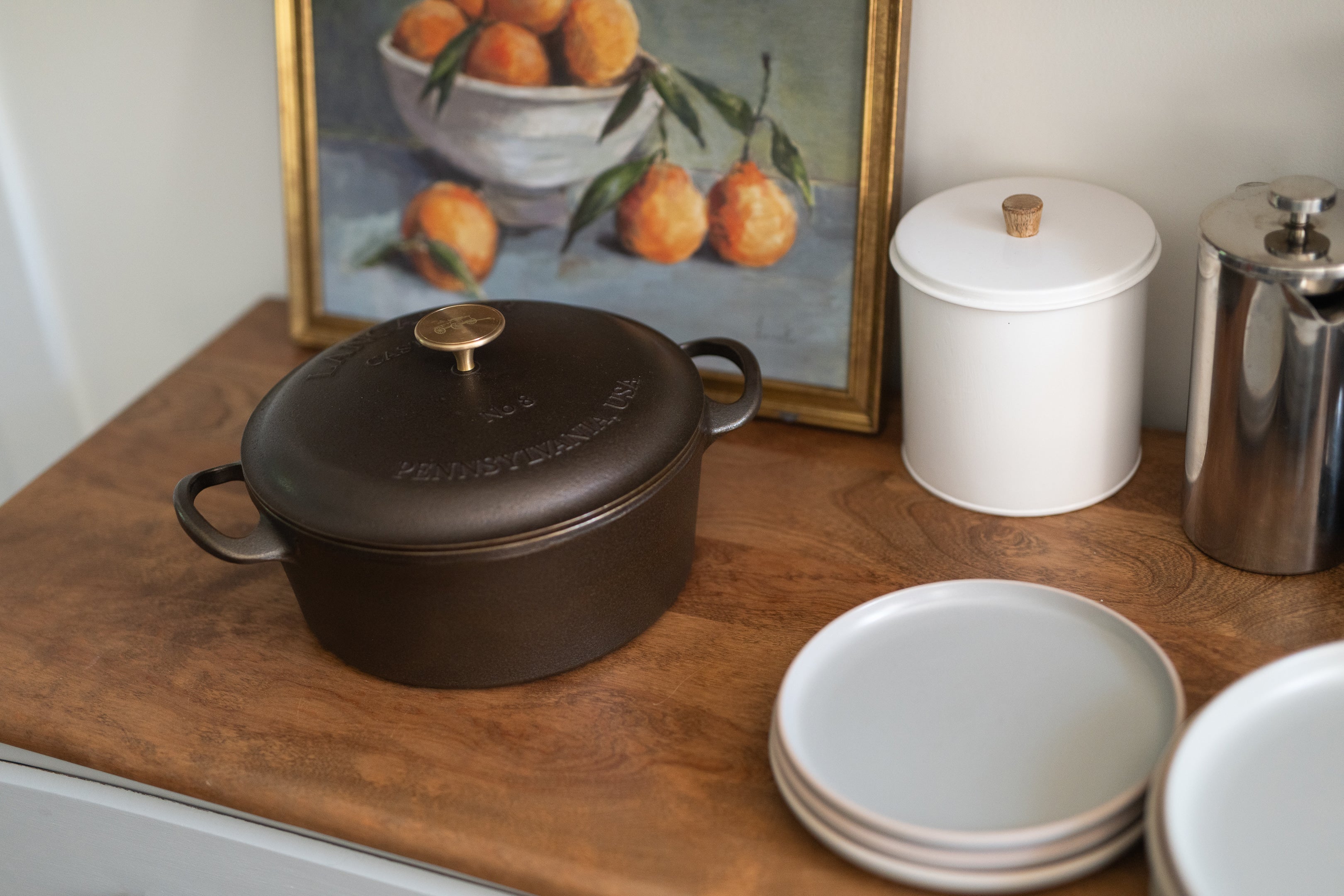
A Dutch oven is the kind of cookware that earns its place over time. It might start with a loaf of bread or a Sunday roast, then become the pot you reach for when you're making soup, braising meat, cooking beans, or feeding a table full of people.
If you're shopping for one, there's an important decision to make: seasoned or enameled?
Both are made from cast iron, both hold heat exceptionally well, and both can handle a wide range of cooking. The difference is the surface. One relies on layers of seasoning built directly onto the iron. The other has a layer of enamel between the food and the cast iron.
Neither is the wrong choice. They simply offer a different cooking experience.
Here's what to consider before deciding which one belongs in your kitchen.
What Is a Seasoned Dutch Oven?
A seasoned Dutch oven is made from bare cast iron. Its cooking surface is protected by layers of oil that have been heated and bonded to the iron through a process called polymerization.
If you've cooked with a traditional cast iron skillet, you're already familiar with the idea.
The seasoning isn't just there for protection. As it develops, it creates a smooth cooking surface that becomes increasingly well suited to everyday cooking. It also gives the Dutch oven a quality that's hard to replicate with other materials: the surface changes with use.
What Is an Enameled Dutch Oven?
An enameled Dutch oven starts with the same basic material: cast iron. The difference is that the cooking surface is covered with enamel, creating a smooth, non-reactive barrier between the food and the iron.
There's no seasoning to build, and you don't have to maintain the surface in quite the same way.
That makes enamel particularly appealing for certain kinds of cooking. Tomato sauces, wine-based braises, and other acidic dishes can simmer for a long time without you having to consider how they're interacting with the cooking surface.
For many cooks, that simplicity is a major advantage.
But seasoned cast iron has its own advantages, and they go well beyond traditional cast iron care.
The Cooking Surface Makes a Difference
The biggest distinction between these two Dutch ovens is what you're actually cooking on.
With seasoned cast iron, food comes into contact with the seasoned iron surface. The seasoning provides a protective layer, but the underlying material still plays a major role in how the pan cooks.
With enamel, you're cooking on a smooth coated surface.
That difference can be subtle at first, but it becomes more noticeable the longer you use the cookware. Seasoned cast iron has a surface that develops over time. You aren't simply maintaining the pan; you're continuing to build it.
Seasoned Cast Iron Develops With Use
One of the best things about seasoned cast iron is that it isn't static.
Use it regularly and the seasoning continues to develop. Cook with oil, clean the pan properly, and give it a little care when needed. Over time, the surface becomes smoother and more established.
It's a gradual process rather than something you finish once and forget about.
And the result isn't necessarily a perfectly uniform black surface. A well-used Dutch oven can have subtle differences in color and texture. That's normal. What matters is how the surface performs.
There's a certain satisfaction in knowing that the pan you're cooking with today has been shaped by the meals you've made in it.
Enameled Cast Iron Keeps Things Consistent
Enameled cookware takes a different approach.
The enamel gives you a consistent cooking surface from the day you bring the Dutch oven home. It doesn't need to be seasoned, and its characteristics don't change in the same way that seasoned cast iron does.
For cooks who prefer a predictable, low-maintenance surface, that's a real benefit.
You can make a pot of tomato sauce, let it simmer, and clean up afterward without wondering whether you've affected the seasoning. There's less to think about, which can be exactly what you want from your cookware.
What About Heat?
Both types of Dutch ovens benefit from the heat-retaining qualities of cast iron.
That's one of the reasons Dutch ovens are so good at the jobs they're known for. Once the iron gets hot, it holds onto that heat and distributes it steadily throughout the cooking process.
Seasoned cast iron has an advantage when you want to push the cookware a little harder. There isn't an enamel coating to consider when you're working with high temperatures, and the bare iron surface is exceptionally durable.
That's useful whether you're searing meat on the stovetop, baking bread at high heat, or moving between different cooking methods.
Seasoned Cast Iron Is Particularly Versatile
A good seasoned Dutch oven doesn't really have a preferred setting.
It works on the stovetop and in the oven. It can be used for baking, roasting, braising, frying, simmering, and searing. If you cook outdoors, it can make the transition from kitchen to fire just as easily.
More importantly, you don't have to think of it as specialized cookware.
The same Dutch oven you use for a loaf of bread on Saturday morning can be filled with chili that evening. A few days later, it might be holding a roast.
That kind of flexibility is one of the strongest arguments for seasoned cast iron.
Enameled Dutch Ovens Have Their Own Strengths
An enameled Dutch oven is especially useful for cooks who frequently make acidic recipes or want a surface that requires very little maintenance. It's also a great option if you like the convenience of cooking, cooling, and cleaning without thinking much about the condition of the seasoning.
The enamel itself provides a smooth surface that can be particularly well suited to soups, stews, sauces, and long braises. For some kitchens, that's exactly the right tool.
What About Bread?
Both options are excellent for baking bread.
The heavy cast iron walls retain heat, while the enclosed Dutch oven helps trap steam around the dough. That combination is a big part of what gives Dutch oven bread its characteristic crust.
Seasoned cast iron has a natural advantage if you want your Dutch oven to be as versatile as possible. You can bake your bread, clean the pot, and move right back into cooking savory meals without having to think about protecting an enamel surface.
Which Is Easier to Maintain?
If we're talking strictly about maintenance, enamel has the advantage.
There's no seasoning to build. You don't need to worry as much about keeping the surface dry, and there's no need to periodically refresh the cooking surface with oil.
Seasoned cast iron asks a little more from you. After cooking, clean it, dry it thoroughly, and add a very thin layer of oil if the surface needs it. That's really the routine. Once you've cooked with cast iron for a while, it becomes second nature. You don't have to stop and think about it every time you use the pan.
What Happens If Something Goes Wrong?
This is one area where seasoned cast iron is particularly forgiving.
If the seasoning wears down, it can be rebuilt. If the surface develops rust, it can be cleaned and reseasoned. Cast iron itself is remarkably resilient.
You're not locked into the condition of the surface the day you bought it.
Enameled cast iron is durable, too, but the enamel is a separate material. If it becomes badly chipped or damaged, there's no equivalent to simply reseasoning the surface.
That repairability is an underrated quality of traditional cast iron. A little wear doesn't necessarily mean the end of the pan.
What About Acidic Foods?
This is probably the clearest category where enameled cast iron has an advantage.
If you're regularly making highly acidic foods and letting them cook for long periods, an enameled surface removes one consideration from the equation.
That doesn't mean seasoned cast iron can't handle acidic ingredients. A well-seasoned Dutch oven can be used with many acidic foods, particularly for shorter cooking times.
If your cooking revolves around long-simmered tomato sauces, enamel may be worth considering.
If your cooking is more varied, seasoned cast iron gives you plenty of room to work.
So, Which One Should You Choose?
The answer depends on what matters most to you.
An enameled Dutch oven is a great choice if you want a consistent, low-maintenance cooking surface and regularly make acidic dishes.
A seasoned Dutch oven is a better fit if you value durability, versatility, high-heat cooking, and a surface that develops with use. It's particularly appealing if you want cookware that can move between different cooking environments without requiring much thought about the material itself.
Every meal contributes to the cooking surface. Every time you use it, you're getting more familiar with the way it heats and responds. With proper care, that relationship can continue for decades.
A Dutch Oven You'll Keep Using
At the end of the day, either type of Dutch oven can become a hardworking part of your kitchen.
Enameled cast iron offers convenience and a consistent surface. Seasoned cast iron offers that same impressive heat retention along with durability, adaptability, and a cooking surface that develops over time.
If you're looking for cookware that feels a little more permanent, seasoned cast iron is hard to overlook.
And the more you use it, the more it becomes your own.
Share:
The Cast Iron Starter Kit: Everything a Beginner Needs
How to Build the Perfect Holiday Charcuterie Board: A Simple Guide to Cheese, Meats, Fillers & Festive Additions