

There’s an old saying we’ve all heard before: buy nice or buy twice. It’s a simple way of putting something we’ve come to appreciate more and more. The things we use every day are worth choosing carefully, especially when they are made to last. The lowest price doesn’t always mean the best value, just as spending more doesn’t automatically mean you’re getting something better. Real value comes from buying something well made, using it often, knowing it's durable enough for your everyday use, and heirloom quality to pass on.
That’s one of the reasons we believe so strongly in craftsmanship at Lancaster Cast Iron. A good piece of cookware should not feel temporary. It should become part of your kitchen and, over time, part of your family’s story. Cast iron has always had that kind of staying power. A skillet can make breakfast on a Saturday morning, sear dinner after a long day, bake a family recipe, and still be ready for the next generation years from now.
There is a certain value in knowing how something was made. At Lancaster, our cookware is made in and around Lancaster, Pennsylvania, where we are able to keep close control over the process from raw iron to finished cookware. Each skillet is cast, precision machined for our smooth cooking surface, seasoned with grapeseed oil, inspected, and packaged locally. That process takes more care than simply producing as many pieces as possible, but we believe that care is part of what makes a piece worth keeping.
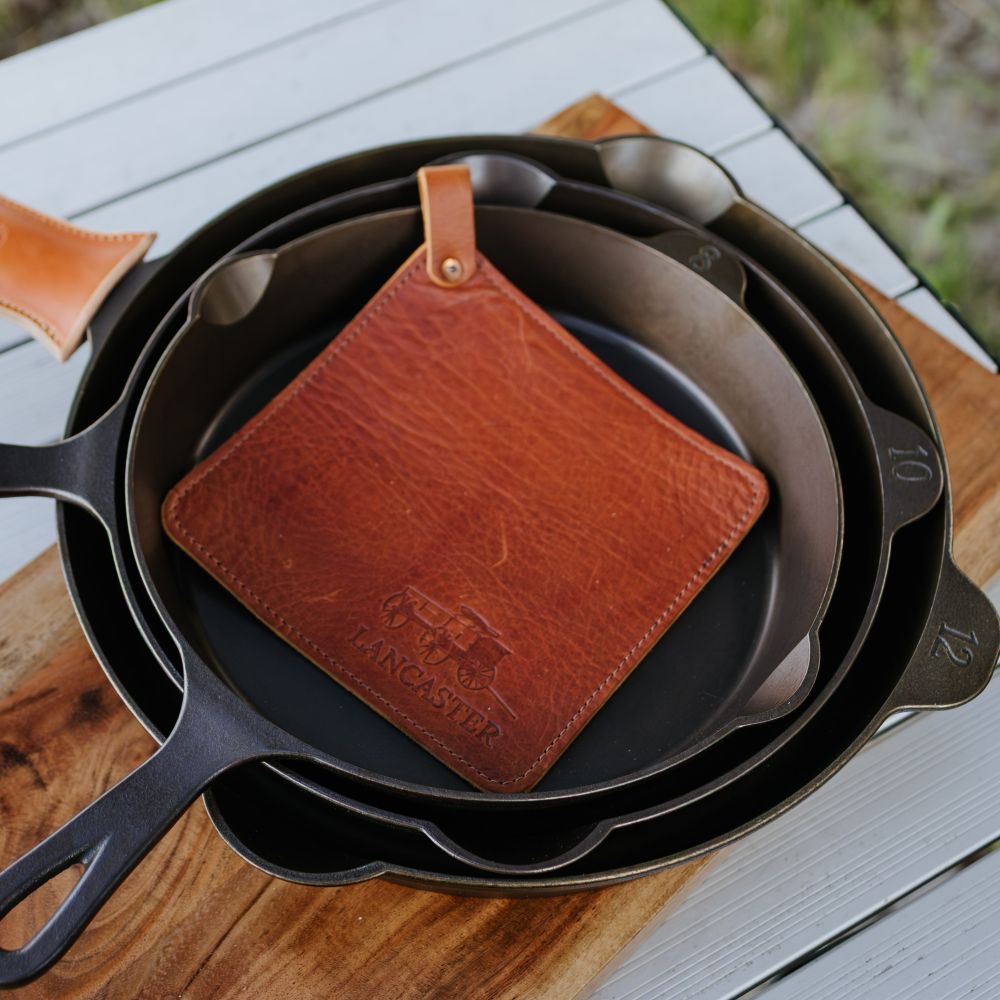
You can see the difference in the details. The smooth cooking surface, the lighter weight, the shape of the handles, the way the skillet feels when you pick it up. None of these things are there just for appearance. They are decisions made around how the pan will actually be used in a real kitchen. We want our cookware to be something you reach for because it works well, not something that sits on a shelf because it is too heavy or too precious to use.
And that is really what we mean when we talk about value. It isn't about buying the cheapest skillet you can find, and it isn't about buying something simply because it costs more. It is about buying something thoughtfully made that you won't need to replace a few years down the road. A well-made skillet can become less like a piece of cookware and more like a kitchen companion. It picks up the marks of meals shared, recipes learned, and years of cooking.
If a $50 10-inch nonstick pan roughly lasts around three years safely before needing to be replaced, replacing that pan over the course of 30 years would mean buying about 10 of them, or roughly $500 spent on 10-in pans. If instead you went with a Lancaster No. 8 Skillet (10-inch skillet), that pan will cost you $175.00 up front, however that pan will last the rest of your life and still be an heirloom piece your kids will want to keep using. Of course, how long a pan lasts depends on how often it is used, how it is cared for, and the quality of the pan itself. But it’s a good reminder that the price you pay upfront isn’t always the same as the value you get over time. A well-made piece of cookware can cost more at the beginning and still be the better value when you consider how many years you’ll actually use it.
In a world where so much of what we buy is designed around the expectation that we will eventually need to replace it, there is something meaningful about choosing things that are made to last. It is bigger than the skillet itself. It is about being a little more thoughtful about what we bring into our homes, what we spend our money on, and what we leave behind.
When a skillet is made to be used for decades rather than replaced every few years, there is less need to continually buy another one, package another one, ship another one, and eventually throw another one away. Choosing quality is not going to solve every environmental problem, but it is one small way of moving away from a culture of constant replacement and toward one of taking care of what we already have.
There is value in that kind of permanence. Cast iron doesn't need a synthetic nonstick coating to do its job, and with proper care, it can keep cooking for generations. Instead of wondering when you'll need to replace your skillet, you can focus on using it, caring for it, and letting it become part of your kitchen's history.
That is what makes craftsmanship feel bigger than the product itself. When something is made well, it has the opportunity to stay useful for a very long time. It can be repaired, cared for, passed down, and given a second life in another kitchen. In a world of things that are increasingly easy to replace, there is something worth preserving in making things that are worth keeping.
There is also something special about knowing that the person who made your cookware cared about what would happen after it left the shop. Good craftsmanship looks beyond the moment of purchase. It considers how something will feel after the first use, after the hundredth meal, and years later when it has become part of someone's everyday routine.
That's the kind of value we're after at Lancaster. Not simply a skillet that is made to sell, but one that is made to be used, enjoyed, and eventually passed along. Because when you buy something well made, you shouldn't have to wonder when you'll need to buy it again.
See how design details compare in our cookware and wooden utensil buying guides, or meet Lucas Huber, one of the people behind our pans.
Share:
How to Clean Cast Iron Without Ruining It
Timeless Cooking: The History of the Humble Wooden Spoon