

There are some kitchen tools that seem to belong to every generation. The wooden spoon is one of them. Long before kitchens were filled with specialized gadgets and cookware designed for every imaginable task, cooks were reaching for simple pieces of wood to stir, scrape, fold, and serve. Many of years later, not much has changed. A good wooden spoon is still one of the most useful things you can keep beside the stove.
Most kitchens have a wooden spoon that gets used for far more than stirring soup. It mixes cake batter, loosens browned onions from a skillet, and reaches into the bottom of a pot of gravy. Its shape is so familiar that it is easy to overlook how much history sits behind it.
Surviving wooden spoons take that story back more than 3,000 years. Later examples tell us about meals aboard Tudor ships and a Welsh custom of giving carved spoons as tokens of affection. Together, they show how one small object could serve as an eating utensil, a personal possession, or a carefully chosen gift.
Wooden Spoons in Ancient Egypt
The Metropolitan Museum of Art holds wooden spoons from Egypt dating back more than 3,000 years. One example is a small wooden toilet spoon from Lisht North (Late Middle Kingdom–early New Kingdom, ca. 1802–1450 BCE) that measures just over three inches long. Other New Kingdom wooden and ivory spoons in the collection further illustrate the long continuity of the form.
The museum also holds a Coptic wooden spoon made in Thebes, Byzantine Egypt, dated to 580–640 CE. These objects come from different periods, but both use the familiar combination of a shaped bowl and a handle.
Neither record establishes when the wooden spoon was first invented or exactly what these particular spoons held. They do, however, put a firm date behind the idea that wooden spoons have a long history. The connection to a modern utensil drawer starts with surviving objects rather than a guess about the first cook to carve one.
A Maple Spoon Aboard the Mary Rose
A more direct glimpse of wooden spoons at mealtime comes from the Mary Rose, Henry VIII’s warship, which sank in 1545. Among the recovered objects are spoons that reveal differences in life aboard the ship.
The Mary Rose Museum’s collection includes a wooden spoon made from maple, described as the type used by most of the crew. Pewter spoons would have belonged to officers. One recovered example bears a personal mark, evidence that these spoons were individual possessions rather than equipment issued by the ship.
That detail brings the history closer to home. A spoon was something its owner kept track of and used at meals. Maple also remains a familiar material for wooden kitchen tools today, though the small eating spoons aboard a Tudor ship served a different purpose from a long-handled cooking spoon beside a modern stove.
Welsh Lovespoons: When a Utensil Became a Gift
In Wales, the spoon took on another role. Decoratively carved wooden lovespoons were given as expressions of affection. Museum Wales holds a dated example from 1667, while noting that the exact origins of the custom are unclear.
Young men traditionally carved lovespoons for their sweethearts, often working from a single piece of wood with simple tools such as pocket knives. Close-grained woods, including sycamore, box, and fruit woods, were popular choices. The handles could carry hearts, chain links, initials, or dates, turning an ordinary spoon form into a personal gift.
These were expressions of carving skill and affection rather than simply spoons for stirring dinner. The custom continues, with lovespoons given for weddings, anniversaries, and other occasions. Their place in this history is a reminder that wooden objects can carry meaning well beyond their practical use.
Why Wooden Spoons Still Earn Their Place Beside the Stove
The ancient objects, shipboard utensils, and carved gifts above had different uses. Today’s cooking spoon has its own demands: a comfortable grip, a bowl that moves food effectively, and enough reach to stir a deep pot without putting a hand close to the heat.
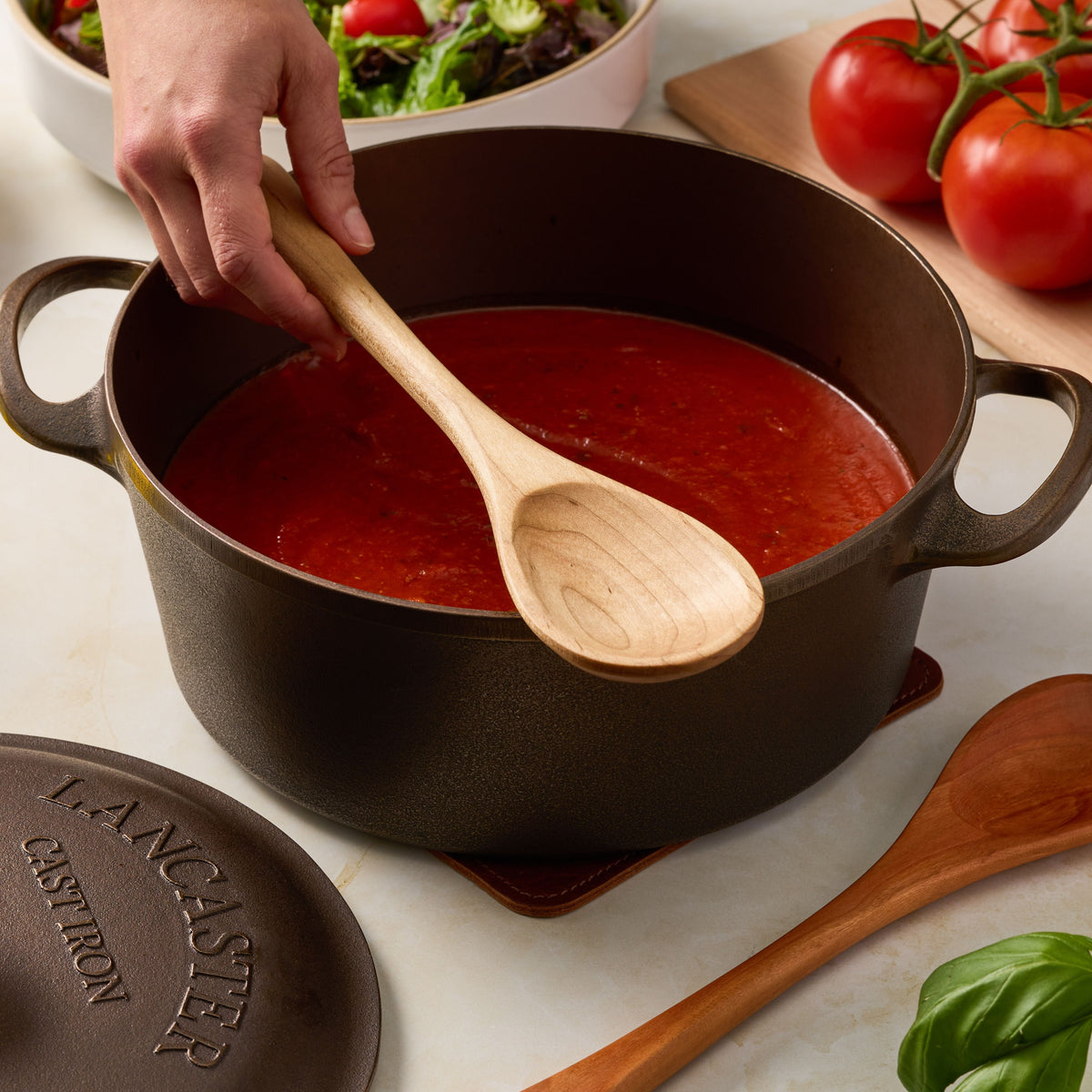
Wood conducts heat much less readily than metal, so the handle does not warm in the same way as a metal spoon. It is also gentle on cookware. A wooden spoon can move between stainless steel, seasoned cast iron, enamel, and nonstick pans, provided its surface is smooth and free of splinters.
Shape matters as much as material. A rounded bowl is useful for stirring and serving, while a flatter edge helps reach across the bottom of a pan. A wooden turner gives broader support when lifting pancakes or vegetables. Choosing the shape for the job is more useful than filling a drawer with tools that do the same thing.
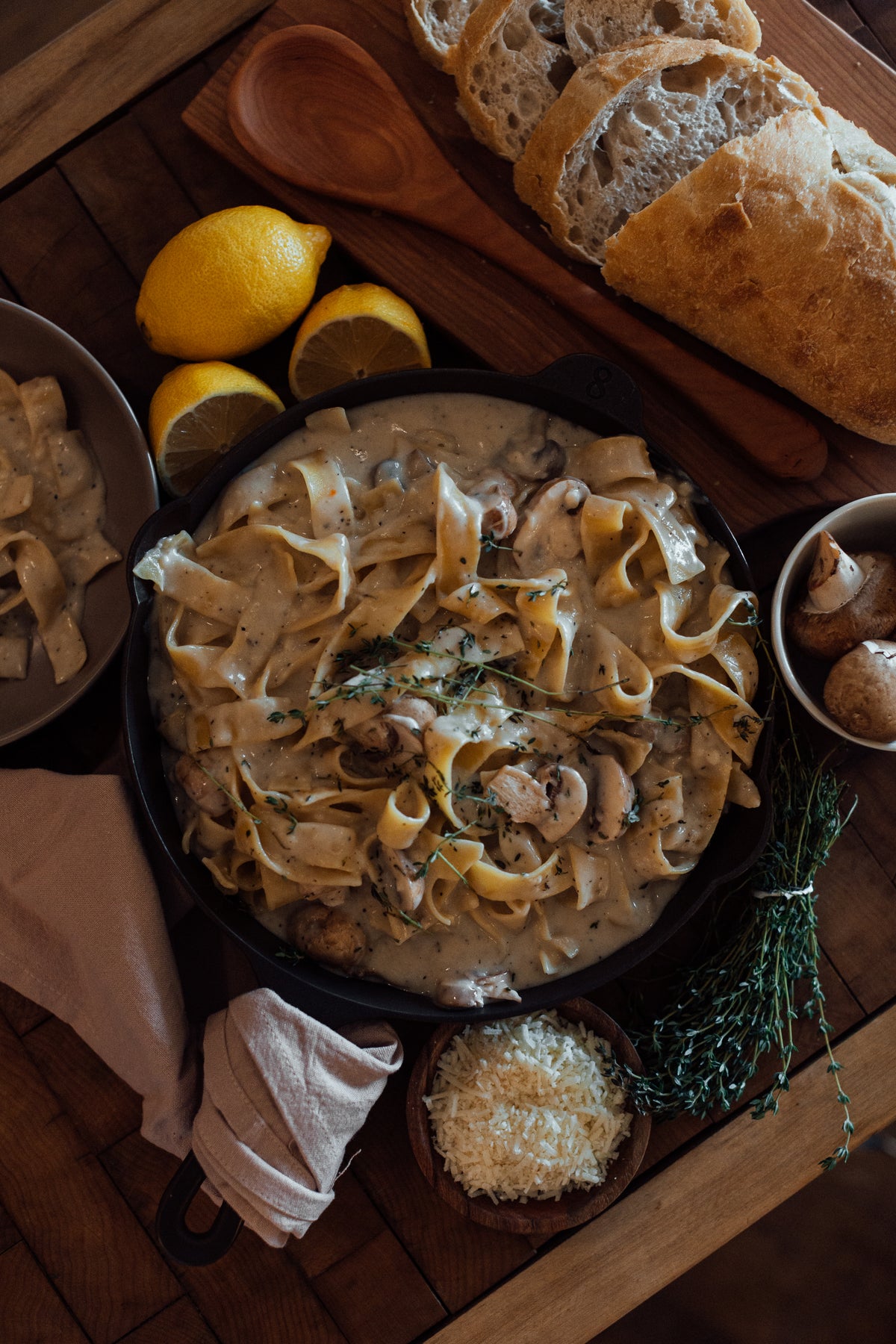
Wood pairs particularly well with seasoned cast iron for stirring, sautéing, and loosening browned bits for a sauce. For a fuller look at that pairing, read Can You Use Wooden Utensils on Cast Iron Cookware?
Pennsylvania Hardwoods in Lancaster’s Kitchen Tools
Lancaster Cast Iron makes its wooden utensils in its Lancaster, Pennsylvania shop from locally sourced Pennsylvania hardwoods, including cherry, maple, and walnut. Those woods give the collection its natural range of colors and grain patterns, from lighter maple to darker walnut.
The collection includes wooden spoons, turners, forks, and spurtles. Each shape answers a different cooking need, whether that is stirring a sauce, lifting food from a skillet, or mixing a batter. The historical connection is not a claim that every design is an exact copy of an antique; it is the continued use of hardwood for tools that spend their working lives in the kitchen.
Giving a Wooden Spoon Years of Use
A well-made hardwood spoon can remain useful for years, but wood needs care. Wash it by hand with mild soap and warm water, towel-dry it, and let it finish drying with air around it. Avoid the dishwasher and prolonged soaking. When the surface feels dry, use a food-safe conditioner intended for wooden kitchenware.
Changes in color and small signs of wear are expected. Deep cracks, splinters, or a weakened handle are reasons to retire the utensil. For more detailed instructions, see Lancaster’s wooden utensil care guide.
A museum spoon tells us about the person who made or owned it. The spoon in a kitchen today has a smaller, more familiar story: the meals it has helped prepare and the hand that reaches for it. Browse Lancaster’s wooden kitchen tools to find a shape that suits the way you cook.
Share:
The Lasting Value of Quality Craftsmanship
Cast Iron Gifts for Cooks: Five Reasons to Give a Skillet and How to Choose