


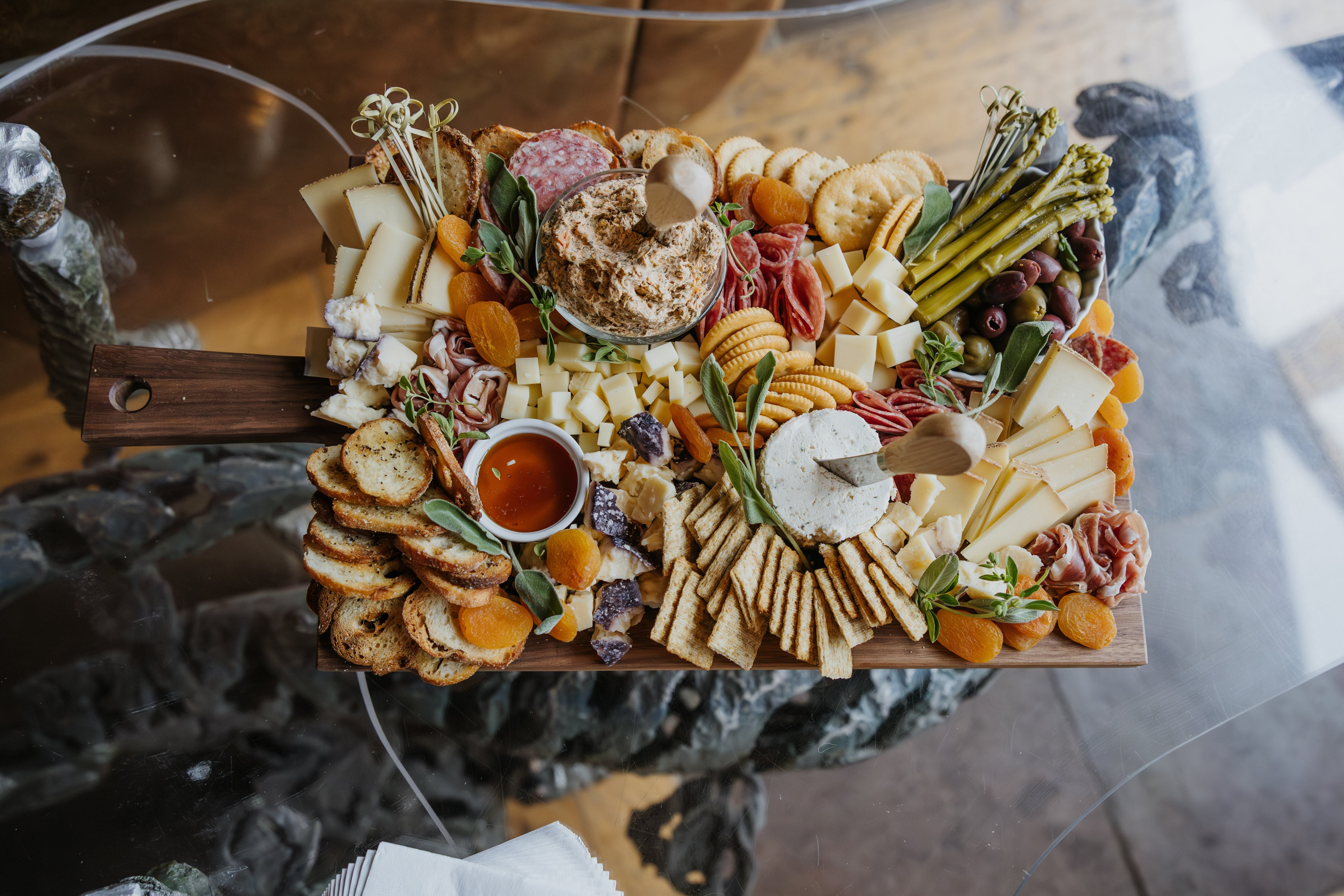
There is something about a holiday charcuterie board that makes people gather around the table before dinner has even started. Someone grabs a piece of salami, someone else reaches for the brie, and before you know it, everyone is standing around the kitchen picking at the board, talking, and going back for “just one more” bite. It doesn't have to be perfectly arranged or covered with every specialty ingredient you can find at the grocery store. It just needs to feel abundant, inviting, and full of things people actually want to eat.
The best part is that putting one together is much easier than it looks. Once you understand where to start and how to think about the different ingredients, you can build a beautiful holiday charcuterie board without spending your entire afternoon arranging grapes.
Start With the Board
Before you start picking out cheeses and meats, think about the size of your board and how many people you're feeding. A large wooden serving board works well for a crowd, while a smaller board is perfect for a few people before dinner. You can also use two smaller boards instead of trying to squeeze everything onto one enormous platter. There really isn't a rule that says charcuterie has to happen on one giant board.
For an appetizer before a meal, about two to three ounces of meat and cheese per person is a good place to start. If the board is going to be the main food you're serving, you'll want more. From there, think about variety rather than quantity. You don't need fifteen cheeses, six kinds of salami, and a dozen different crackers to make a board feel special. A handful of really good ingredients, thoughtfully paired together, will always be more enjoyable than a board that's simply overflowing with food.
Choose Your Cheese First
I like to start with the cheese because it gives the rest of the board some direction. Three cheeses is usually plenty for a medium-sized board, and choosing different textures will make it much more interesting to eat. A soft cheese such as brie or goat cheese gives you something creamy and spreadable, while an aged cheddar or gouda brings a firmer, sharper bite. For the third, you can have a little fun with something more distinctive, such as blue cheese, smoked cheese, or an herbed variety.
You don't have to choose the most unusual cheeses you can find. In fact, having at least one familiar option is usually a good idea, especially if you're serving a crowd. The goal is to give people choices without making them wonder what exactly they're supposed to do with half the ingredients on the board.
Add the Meat
Once the cheese is in place, bring in the cured meats. Two or three varieties are more than enough for most holiday boards. Prosciutto is always a good choice because it's delicate and salty, while salami or soppressata gives you something with a little more texture and seasoning.
This is also where you can start thinking about how the board will look. Instead of laying every slice of meat flat, fold some of the prosciutto loosely and arrange salami in small stacks or folds. A little imperfection makes the board feel more relaxed and approachable.
Build Around Contrast
Once the cheese and meat are down, you're ready for the fun part. Start looking for contrast. If you have a lot of rich, creamy cheese, add something tart or crisp. Salty meats pair beautifully with something sweet. If most of the board is soft, bring in some crunch with nuts and crackers.
This is really the thought process behind building a good charcuterie board. You're not just adding ingredients because they look pretty. You're thinking about how everything is going to taste together.
Fresh fruit is one of the easiest ways to add both color and contrast. Red grapes are especially nice for a holiday board, while sliced pears and apples give you a crisp bite alongside richer cheeses. Dried cranberries, figs, cherries, and apricots work well, particularly if you want the board to feel a little more seasonal.
How Many Fillers Do You Need?
This is where it can be tempting to go overboard. You see an empty spot on the board and immediately think, “I need something else.” Before long, you've bought six kinds of nuts and three different jars of jam.
You really don't need that much.
For a medium or large holiday charcuterie board, I'd start with about four to six fillers. These could be grapes, dried fruit, olives, cornichons, nuts, crackers, jam, honey, or a few pieces of fresh fruit. Pick the ones that make sense with the other ingredients you've already chosen. If you've got a lot of salty cheese and meat, something sweet or acidic will balance it out. If you've chosen several soft ingredients, bring in some crunch.
A small dish of fig jam or honey is another easy addition. You only need a few spoonfuls, but it gives people something to drizzle over cheese or spread onto a cracker. It's one of those small details that makes the board feel much more complete.
Add a Little Holiday Color
This is where you can make a traditional charcuterie board feel festive without turning it into a Christmas decoration.
Fresh rosemary and thyme tucked between the ingredients add beautiful greenery and make the board smell wonderful. Pomegranate seeds, dried cranberries, figs, pears, and toasted pecans bring in those deeper reds, greens, and warm colors that naturally feel like the holidays.
The Secret Ingredient: Something Warm
Here's where I think a holiday charcuterie board can go from good to memorable. Most of the ingredients are cold or room temperature, so adding one warm, homemade bite gives the board another layer entirely.
One of my favorite additions would be goat cheese-stuffed bacon-wrapped dates. The combination is hard to beat: sweet dates, creamy goat cheese, and salty, crisp bacon all in one bite. Instead of transferring them to a serving dish, bake them in a small Lancaster cast iron skillet and bring the skillet straight to the table. It keeps the dates warm and makes the whole presentation feel a little more special.
You could also add a warm goat cheese appetizer, such as Lancaster's roasted goat cheese and garden tomato dip. The creamy goat cheese, roasted tomatoes, garlic, olive oil, basil, and thyme make it a natural companion for crusty bread, and serving it straight from a No. 8 skillet gives the board something warm and inviting in the middle of all those cold ingredients.
How to Actually Arrange a Charcuterie Board
If you're standing in front of an empty board wondering where to begin, start with the largest ingredients. Put down your bowls first, especially if you're serving olives, pickles, honey, jam, or anything else that needs to be contained. Then place your cheeses around the board rather than grouping them all together.
Next, add the meats and crackers. Fold or loosely arrange the meat rather than trying to make everything perfectly uniform. Place crackers near the cheeses they pair well with, but don't worry about creating perfectly symmetrical sections.
Now start filling in the larger open spaces with fruit. Grapes are especially useful because they can fill a surprising amount of space, while dried fruit is perfect for smaller gaps. Add your nuts, olives, pickles, and other little fillers last.
A Simple Formula to Follow
If you don't want to overthink it, use a simple formula. Start with three cheeses, two or three meats, two kinds of crackers, four to six fillers, and one or two special additions. Finish it with something seasonal, such as fresh herbs, pomegranate, cranberries, figs, or toasted nuts.
That gives you plenty of variety without making the board feel chaotic. From there, you can adjust it based on the people you're serving. If your family loves pickles, add more pickles. If everyone has a sweet tooth, make room for chocolate and extra fruit. If you're serving a crowd that loves warm appetizers, make one of those the star of the board.
Make It Your Own
Think about the combinations as you're building it. Sharp cheddar with crisp apple. Prosciutto with pear. Goat cheese with fig jam. Salami with a crunchy pickle. A warm bacon-wrapped date next to a creamy wedge of cheese. Those little pairings are what make people keep coming back to the board.
So don't worry too much about making yours perfect. Start with a few cheeses and meats you know people will enjoy, add some contrast with fruit, nuts, and something sweet, then give the board one or two additions that make it feel like your own. A warm skillet of bacon-wrapped dates or roasted goat cheese can do more for a holiday spread than another five varieties of crackers ever could.
More Holiday Recipes From Lancaster Cast Iron
Looking for a few more recipes to round out your holiday table? Browse Lancaster Cast Iron's collection of skillet appetizers, sides, baked dishes, and desserts for more ideas that can be served straight from the pan.

Share:
Seasoned vs. Enameled Dutch Ovens: Which One Is Right for You?
Cast Iron Cookware: American Foundries to the Modern Kitchen