

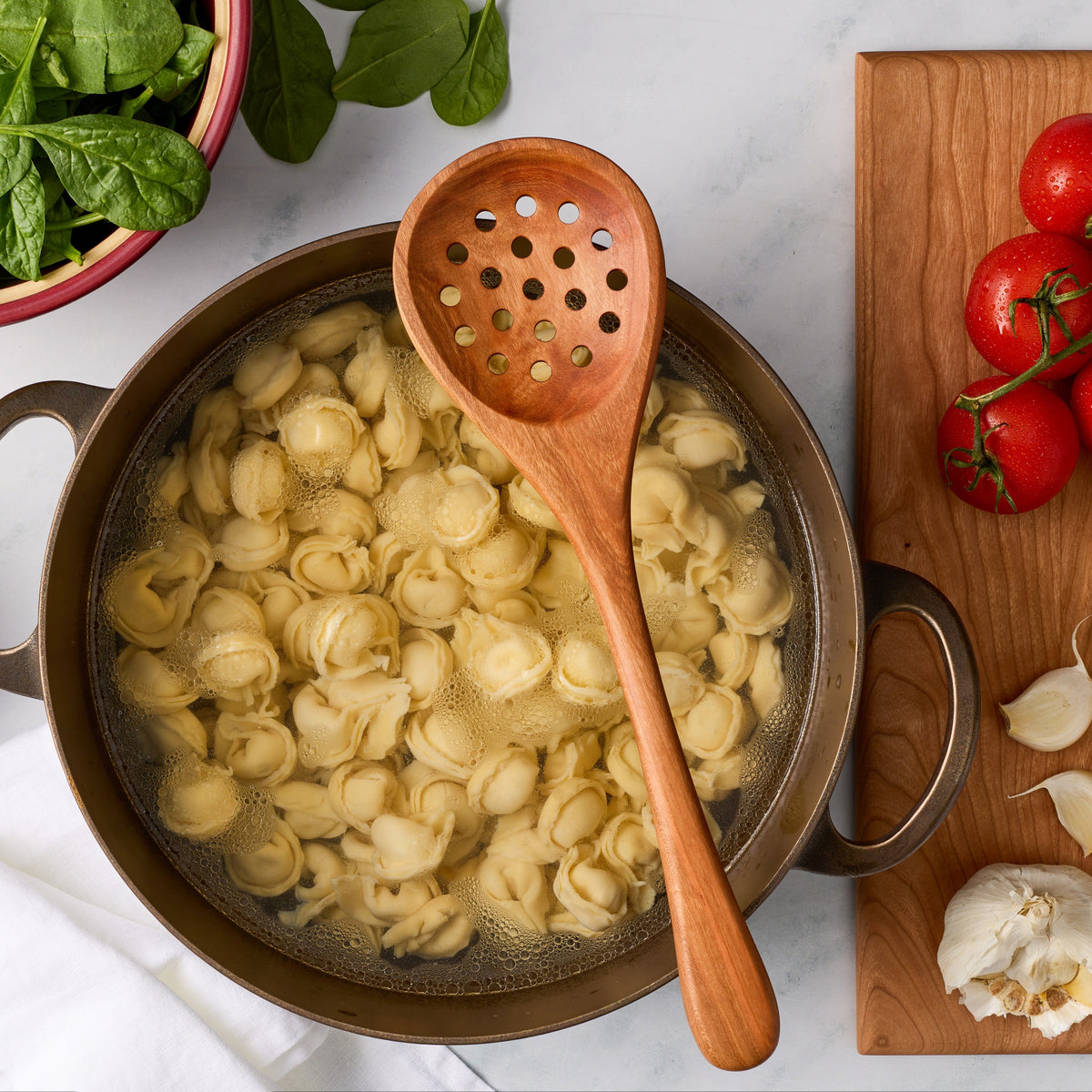
Yes, you can absolutely use wooden utensils with cast iron cookware. In fact, wood is one of the most practical choices for cooking with a cast iron skillet. Wooden spatulas, spoons, turners, and other cooking tools are gentle on the cooking surface while still being strong enough for everyday tasks like stirring, flipping, scraping, and serving.
For cast iron cooks, the combination makes a lot of sense. Cast iron is known for its durability, long lifespan, and high heat cooking, while well-made wooden utensils can offer the same kind of usefulness and longevity in the kitchen, as well as not transferring heat.
Are Wooden Utensils Safe for Cast Iron?
Wooden utensils are safe to use on traditional seasoned cast iron. Unlike cookware with a synthetic nonstick coating, seasoned cast iron does not have a delicate chemical coating that can be scratched away by normal utensil use. Cast iron manufacturers commonly recommend wood or metal utensils for traditional cast iron cookware.
That does not mean every utensil is equally useful, however. A wooden turner with a relatively thin edge can be particularly helpful when working underneath eggs, pancakes, vegetables, or other foods that need to be lifted without excessive force. A wooden spoon, meanwhile, is well suited for stirring sauces, vegetables, grains, and other foods directly in the skillet.
The important distinction is between traditional seasoned cast iron and enameled cast iron. Enameled cookware has a glass-like porcelain surface bonded to the iron, and manufacturers generally recommend avoiding metal utensils because they can scratch the enamel. Wooden utensils are a suitable option for that type of cookware as well.
Why Wood Works So Well With Cast Iron
One advantage of a wooden utensil is that it gives you a firm cooking tool without introducing a hard metal edge to the pan. This can be especially useful when cooking on a smooth cast iron surface.
Wood also has a natural feel in the hand. A properly shaped wooden spatula or spoon can be comfortable during longer cooking sessions, and unlike plastic utensils, quality hardwood tools do not rely on synthetic materials to provide their structure.
That makes wooden utensils a natural fit for the kind of cooking cast iron is often used for. A skillet might start the morning with eggs, move on to sautéed vegetables at lunch, and finish the day with a steak or skillet dessert. The same wooden tools can be very useful for each of those meals.
Wooden Utensils and Seasoning
A common concern among cast iron owners is whether using a wooden utensil will damage the seasoning. Under normal use, it should not.
Cast iron seasoning is created when cooking oil or fat polymerizes and forms a hardened layer on the iron surface. That seasoning helps create an easy-release cooking surface and also helps protect the cookware from rust.
A wooden utensil used for ordinary cooking should not strip away that seasoning. In fact, the best way to maintain seasoned cast iron is generally to keep cooking with it and follow appropriate cleaning and drying practices.
Of course, seasoning can be affected by things other than utensils. Extended cooking with highly acidic ingredients, aggressive cleaning, or leaving the cookware wet can create problems. If seasoning becomes damaged or starts to wear unevenly, it can be rebuilt with additional cooking and, when necessary, a fresh seasoning process. Read more about seasoning trouble shooting and how to properly care for your cast iron.
Wooden Spatulas Are Especially Useful
If you only add one wooden utensil to your cast iron kitchen, a wooden spatula or turner is a particularly versatile choice.
A thin, shaped edge can slide underneath food while keeping you in control of the pan. That makes a wooden turner useful for everything from fried eggs to burgers, roasted vegetables, grilled cheese, and pancakes.
The shape matters, too. A broad turner can be useful for larger foods, while a narrower tool may provide more control around the edges of a skillet. This is one reason Lancaster Cast Iron makes wooden cooking utensils in its own shop. The goal is not simply to make another kitchen accessory, but to create tools that work naturally alongside cookware designed for real, everyday cooking.
Lancaster Cast Iron and Wooden Cooking Tools
Lancaster Cast Iron produces its cast iron cookware in and around Lancaster, Pennsylvania, with an emphasis on lightweight, heirloom quality, smooth-surfaced cookware inspired by vintage American cast iron. The company's wooden utensils are also made in its shop, aiming for the same heirloom quality that you will reach for day after day.
That combination is useful in a kitchen because a good skillet does not exist in isolation. The way you cook with it depends on the tools you reach for every day.
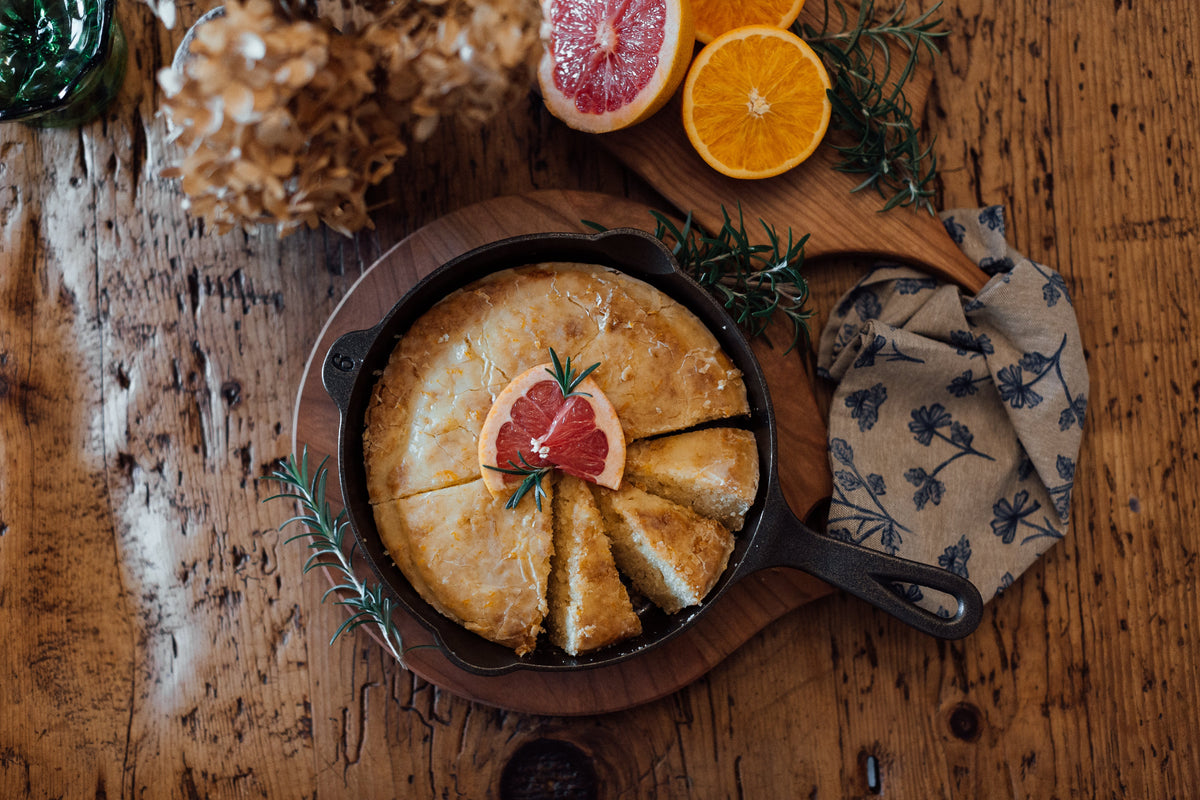
Lancaster's No. 8 skillet, for example, weighs just 4 pounds, making it easier to lift, maneuver, and move around the stovetop than many traditional cast iron skillets. Its smooth cooking surface pairs naturally with wooden utensils for everything from breakfast to dinner. Rather than treating cast iron as something that needs to be handled delicately, the idea is to make cookware that can be used regularly and become part of the rhythm of a kitchen.
Do Wooden Utensils Scratch Cast Iron?
Ordinary wooden utensils should not scratch a traditional cast iron cooking surface under normal cooking conditions. Cast iron itself is extremely durable. The seasoning on the surface does require some care, but using a wooden spoon or turner to stir or flip food is not a concern.
There is one caveat: wooden utensils can become rough, cracked, or splintered with age. If a utensil has developed a damaged edge, it is better to replace or refinish it rather than continue using it on any cookware. Quality wood tools should be kept clean and allowed to dry properly between uses.
Can You Scrape Food With a Wooden Utensil?
A sturdy wooden spatula can be useful for loosening food from the bottom of a skillet, particularly when you are deglazing or working with browned bits left after searing. Those browned pieces, known as fond, can contain a great deal of flavor and are often the starting point for pan sauces.
Wood is not as aggressive as a rigid metal scraper, so it is not necessarily the best tool for every stuck-on mess. But for everyday cooking, a wooden utensil can loosen food while giving you good control over how much pressure you apply.
If something is seriously stuck, it is better to use an appropriate cleaning method rather than trying to force it loose with excessive pressure.
How to Care for Wooden Utensils
Wooden cooking utensils should generally be washed by hand rather than left soaking in water for extended periods. After washing, dry them thoroughly.
Over time, wood can become dry from repeated washing and exposure to heat. Depending on the type of wood and finish, a wood conditioner can help maintain the utensil's surface.
Cast iron has its own care routine as well. After cooking, wash the skillet, dry it thoroughly on your stove top or with a towel, and apply a light layer of cooking oil. Maintaining the seasoning is part of regular cast iron ownership, not something that should keep you from using the pan.
Wooden vs. Metal Utensils on Cast Iron
There is no universal rule that says cast iron must be used with wooden utensils. Traditional seasoned cast iron can handle wood or metal cooking tools.
The choice usually comes down to the type of cooking you are doing and the tool you prefer to use.
Metal can be useful when you need a particularly thin edge or want to work firmly against the cooking surface. Wood is quieter, comfortable in the hand, and versatile for stirring and turning. For many home cooks, having multiple types available makes the most sense.
Why Wooden Utensils Belong in a Cast Iron Kitchen
Cast iron and wood share something important: both can become better kitchen tools through years of use.
A well-maintained cast iron skillet can be passed from one generation to the next. A well-made wooden spoon or spatula can similarly become a familiar part of a kitchen rather than something replaced every year.
Lancaster Cast Iron prioritizes heirloom quality cookware and utensils that become staples in your kitchen. The company focuses on American-made cast iron designed for everyday cooking, along with wooden utensils made in its own shop. The result is a kitchen setup built around durable materials rather than disposable ones.
So, can you use wooden utensils on cast iron cookware?
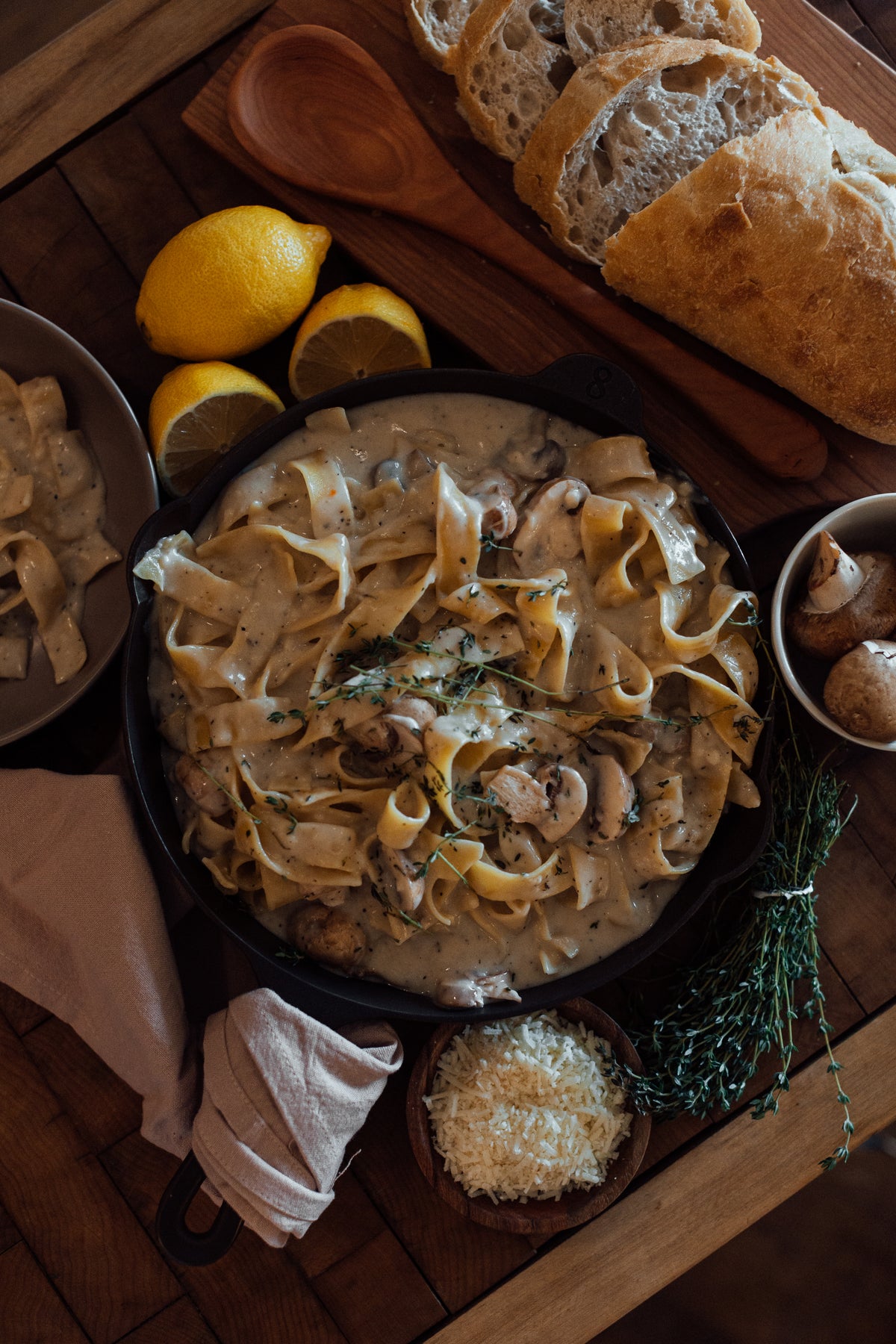
Yes. And for many cooks, they are one of the best everyday choices. A few good wooden utensils are durable, comfortable, versatile, and well suited to the seasoned surface of traditional cast iron. Whether you're turning eggs in a Lancaster No. 8 skillet, stirring vegetables, scraping up the browned bits from a steak, or serving dinner straight from the pan, wood and cast iron make a practical combination for real cooking.
Share:
The History of the Spurtle: From Scottish Hearths to Modern Kitchens
The Ultimate Care Guide for Wooden Cooking Utensils